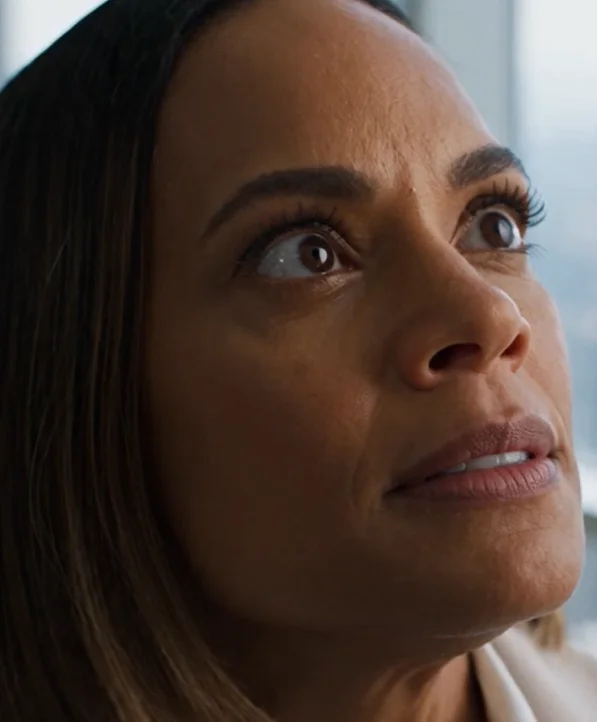
Maya had not reached the conclusion that nobody would believe her after filing a complaint and receiving an unsatisfactory response. She had expected disbelief before the process even began. She had understood, almost instinctively, that if her account conflicted with an officer’s account, she might need evidence simply to establish that her version deserved consideration.
“What happened after he pushed you against the car?” Elena asked.
“He handcuffed me.”
“Did he tell you what you were being arrested for?”
“He said I knew why.”
“Did you?”
“I knew the company had accused me of stealing money. I didn’t know what that had to do with the way he was treating me.”
“Did you explain that the funds had been authorized?”
“Yes.”
“What did he say?”
“He told me to stop making excuses.”
Maya’s voice grew quieter.
“I tried to explain that I had emails showing the reimbursements were approved. I told him I could provide the documents. He said my attitude wasn’t helping.”
Elena remembered the arrest report again.
Subject displayed aggressive behavior.
“What happened at the station?”
Maya stared into her cup.
“They left me in a room for almost two hours. I asked to speak to someone about my shoulder, and they told me to wait. Eventually, another officer came in and asked me questions about the theft allegation.”
“Were you charged?”
“Yes.”
“Were you released that evening?”
“After several hours.”
Elena paused.
“Did you have an attorney?”
“Not at first. I called one the next morning.”
“Did your attorney know about the physical contact?”
“I told her.”
“What did she say?”
Maya looked toward the window.
“She said we should focus on the criminal case first. She told me that we could file a complaint about the officer later.”
“Did you?”
“Yes.”
“When?”
“Two days after my arrest.”
“Did anyone contact you?”
“No.”
“Did you receive a written response?”
“I received an email saying the complaint had been received. A few weeks later, I was told the matter had been closed.”
Elena frowned.
“Did they explain why?”
“No.”
“Did you ask?”
“Several times.”
“What happened?”
“Nothing.”
Maya lifted her eyes.
“Who was I supposed to ask? The people I complained about were the people who controlled the complaint process.”
Elena had no immediate answer.
She had heard defendants express distrust of law enforcement before. Some had legitimate reasons. Others had misunderstood procedures or drawn conclusions from incomplete information. She had always tried to distinguish between the two without dismissing either.
But Maya’s situation raised a different question.
What did a complaint process mean if the person using it could not discover what had happened to her complaint?
What confidence could anyone have in a system that accepted allegations, issued a receipt, and then offered no meaningful explanation for the outcome?
Maya had not asked for special treatment. She had asked for someone to investigate an officer’s conduct.
She had received silence.
“Why did you contact me?” Elena asked.
Maya took a long breath.
“Because when I saw what happened to you, I realized something.”
“What?”
“I thought people like you were protected.”
“People like me?”
“Judges. Lawyers. People with titles. People who know the system and understand how to make others listen.”
Elena looked down at her hands.
“I thought so, too.”
Maya seemed surprised.
“You did?”
“Yes.”
Elena did not elaborate. She was still trying to understand the distance between what she had believed about the courthouse and what she had experienced inside it.
Maya continued.
“I thought that if an officer did something wrong to someone important, there would be immediate consequences. I thought supervisors would investigate. I thought people would take it seriously because they would understand that it could become a public scandal.”
She looked at Elena.
“But he did it to you, too.”
“Yes.”
“And he still thought he could explain it away.”
“That appears to be what he attempted.”
Maya leaned back.
“That scares me.”
“Why?”
“Because if they can do that to you, what chance does someone like me have?”
Elena felt the question settle into her chest.
She had no easy answer.
She could tell Maya that the law provided protections. She could explain the procedures available to people who believed they had been mistreated. She could describe the independent investigation, the review of the body-camera footage, and the possibility of criminal charges against Miller.
But those explanations would not address the central issue.
Maya had already tried to use the available procedures.
She had filed a complaint. She had preserved medical records. She had contacted the department. She had followed the instructions given to her.
And she had received no meaningful response until the officer involved struck a judge in a courthouse hallway.
Elena looked at her.



