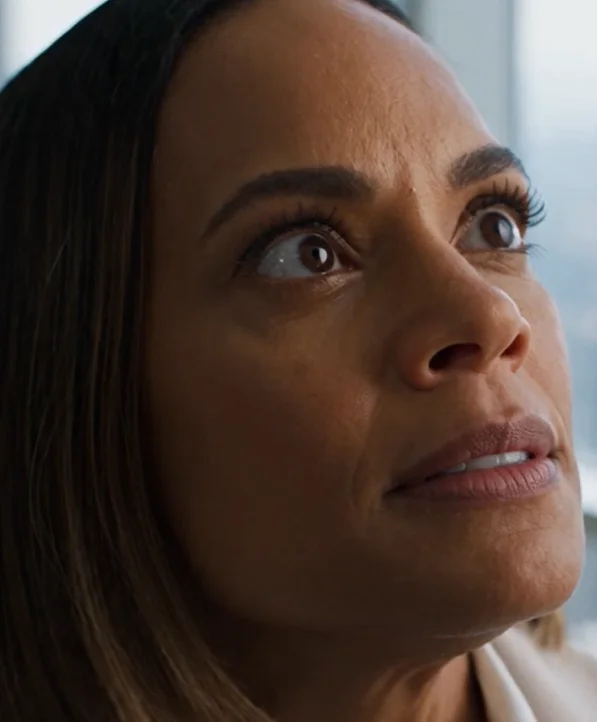
“I don’t know whether the system will do everything it should,” she said. “But I can promise you that I will not pretend I haven’t heard what you’re telling me.”
Maya’s eyes filled with tears, although she did not allow them to fall.
“Thank you.”
Elena shook her head.
“You don’t have to thank me for listening.”
“Maybe I shouldn’t.”
Maya gave a small, sad smile.
“But I do.”
They sat quietly for a moment.
Then Elena asked whether anyone else had witnessed Maya’s arrest.
“Yes,” Maya replied. “A woman named Patricia Green.”
“Do you know her?”
“Not personally. She was leaving the parking garage. She saw what happened and came forward afterward.”
“Has she spoken to the investigators?”
“She told Miller’s supervisor what she saw.”
Elena frowned.
“His supervisor?”
Maya nodded.
“That was what I was told.”
“When did that happen?”
“A few days after I filed the complaint.”
“Did anyone from Internal Affairs contact you?”
“No.”
“Did they contact Patricia?”
“Not that I know of.”
Elena sat back.
“Interesting.”
Maya looked concerned.
“What?”
“If your complaint was closed, but a witness had offered an account of the encounter, I want to know how that information was reviewed.”
“Does that mean something went wrong?”
“It means we need to establish what happened to the information before drawing conclusions.”
Maya nodded slowly.
Elena was careful not to promise that the evidence would produce a particular outcome. She could not decide Maya’s criminal case, and she would not allow her personal experience to become a reason to interfere with the proceedings. Her role in this matter was not to replace the investigators or become an advocate for a particular verdict.
But she could insist that the process be transparent, that evidence be preserved, and that allegations of misconduct be examined fairly.
She could also make sure that the courthouse did not treat Maya’s experience as irrelevant simply because Maya lacked a title that made people pay attention.
“Would you be willing to provide another statement?” Elena asked.
“Yes.”
“Would you be willing to share copies of the records you have?”
“Yes.”
“Keep the originals. Don’t give away anything you cannot replace. Make copies of your emails, photographs, medical records, and complaint confirmation.”
Maya nodded.
“I have most of it organized already.”
“Good.”
Maya hesitated.
“Can I ask you something?”
“Of course.”
“Are you going to be involved in my criminal case?”
“No. I won’t handle your case, and I won’t interfere with the judge assigned to it. My concern here is what happened during the encounter with Miller and how the complaint was handled.”
“All right.”
Elena continued.
“If the investigation uncovers information relevant to your case, it must be provided through the proper legal process. Your attorney should be informed and given the opportunity to review any material that may affect your defense.”
Maya looked relieved.
“I appreciate that.”
She gathered her folder and placed it back in her handbag.
Before leaving, she paused beside the table.
“I used to think the hardest part of being accused of something was proving that you hadn’t done it.”
Elena waited.
“Now I think the hardest part is getting people to believe that the way you were treated matters, even if they still think you might be guilty.”
Elena looked at her for a long moment.
“You’re right,” she said. “Those are two different questions, and they deserve to be treated separately.”
Maya nodded.
Then she left the café and disappeared into the afternoon crowd.
Elena remained seated for several minutes.



