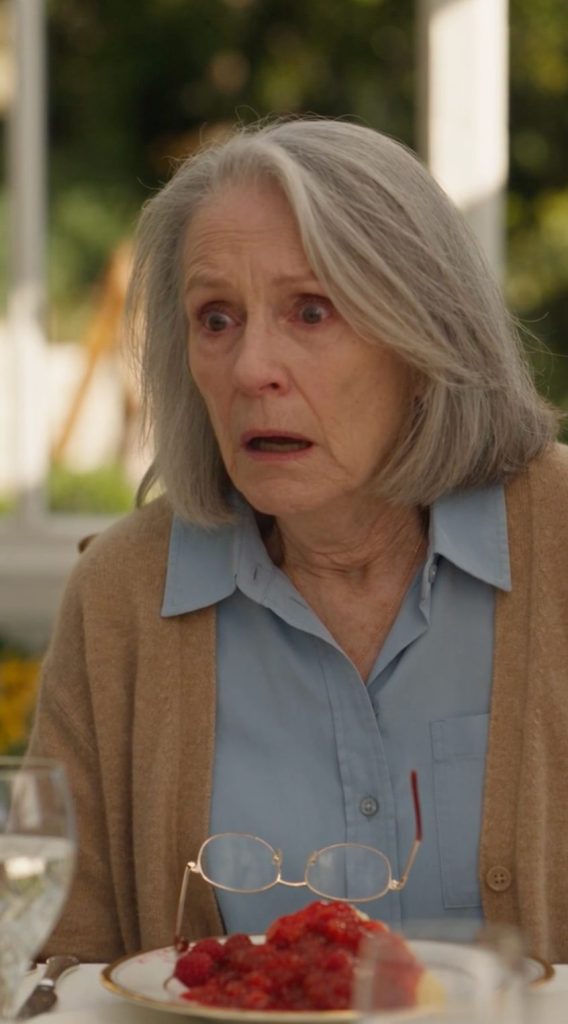
Naomi opened the packet.
The documents inside were old but carefully preserved.
There were original trust instruments, amendments, letters of instruction, and records of a meeting held shortly before Ruth Carter passed away.
Samuel, who had joined us, began photographing the pages.
Then Naomi found a document neither of us had expected.
It concerned succession.
Under the original arrangement, Ruth had contributed a substantial property interest to a charitable land trust.
Thomas and I had received management and occupancy rights through the business arrangements, while the trust retained independent ownership interests, restrictions, and approval authority.
When Ruth died, certain responsibilities passed to a designated trustee.
But the records also preserved a separate position.
A successor representative, chosen from Ruth Carter’s descendants, would hold a decisive vote on any attempt to sell the protected north parcel or eliminate its community purpose.
I read the provision twice.
“I thought those rights had ended when Ruth passed away.”
Naomi shook her head.
“No.
They were preserved.
The later amendments appear to have maintained them.”
“Then who holds that position now?”
Samuel searched through the records.
“The appointment after Ruth’s death wasn’t completed in these files.”
Naomi looked at Margaret.
“Do you have the accompanying family records?”
Margaret brought another box.
Inside lay old correspondence, a photograph of Ruth with a young woman, and a handwritten family history.
A surname appeared repeatedly.
Carter.
Naomi turned toward me.
“Did Ruth ever mention her granddaughter?”
I tried to remember.
“She spoke about a little girl whose mother had moved away.
I don’t remember her name.”
Samuel was examining a more recent memorandum.
“There’s a reference to a great-granddaughter.”
I leaned forward.
“What name?”
He looked at the paper.
Then he looked at Naomi.
“We need to verify this before we say anything.”
The hesitation frightened me.
“Samuel, tell me.”
He carefully laid the document on the table.
The name listed on the family record was familiar.
Very familiar.
Leah Carter.
I stared at the page.
The young server who had cried behind the coffee station on Mother’s Day.
The woman who had risked her job to tell me what she knew.
I whispered, “That can’t be a coincidence.”
Naomi looked at me thoughtfully.
“I don’t think it is.”
But the most extraordinary part was still hidden in the final paragraph of the old succession agreement.
A provision Ruth had insisted upon decades earlier.
A provision Thomas had preserved.
A provision that could change the entire transaction.
If the protected property were threatened by an unauthorized private sale, the independent successor representative could demand enforcement of the trust’s original purpose and seek to prevent the transfer.
No one had the right to sell that land merely because the restaurant business was valuable.
And Daniel’s authority as manager did not change that fact.
I looked at the photograph of Ruth.
For the first time in years, I remembered the exact words she had spoken when Thomas asked why she refused to sell her remaining land rights outright.
She had smiled.
“Because someday somebody will look at this river and see nothing but money.”
Then she had turned toward me.
“And when that happens, I want somebody who remembers the people.”
I gripped the edge of the table.
Ruth Carter had anticipated the very temptation that was now destroying my family.
And somewhere in Asheville, a young waitress might possess the legal authority to help stop it.
The following morning, Naomi and I asked Leah to meet us privately.
She arrived looking worried.
“Am I in trouble?”
“No,” I assured her.
“But we need to ask you something about your family.”
When Naomi mentioned Ruth Carter, Leah’s expression changed immediately.
“That was my great-grandmother.”
I felt a strange tightening in my chest.
“Did you know she once helped run this property?”
Leah nodded.
“My grandmother told me stories.
She said Great-Grandma Ruth always believed a house should be useful to somebody besides the person collecting the money.”
Naomi smiled faintly.
“That sounds like her.”
We explained the trust documents and the possible succession rights.
Leah listened without interrupting.
When Naomi finished, she shook her head.
“I don’t understand.
Are you saying I might own part of this place?”
“We’re saying you may have inherited certain rights connected with the land trust,” Naomi replied.
“Those rights have to be verified before anyone can exercise them.”
Leah stared at us.
“But I’m just a server.”
I reached across the table.
“You’re a person, Leah.
Your job doesn’t make your rights smaller.”
Her eyes filled with tears.
“My mother always said Great-Grandma Ruth wanted the land protected.
I thought she meant people should take care of the trees.”
Naomi opened a folder.
“She meant that, too.



