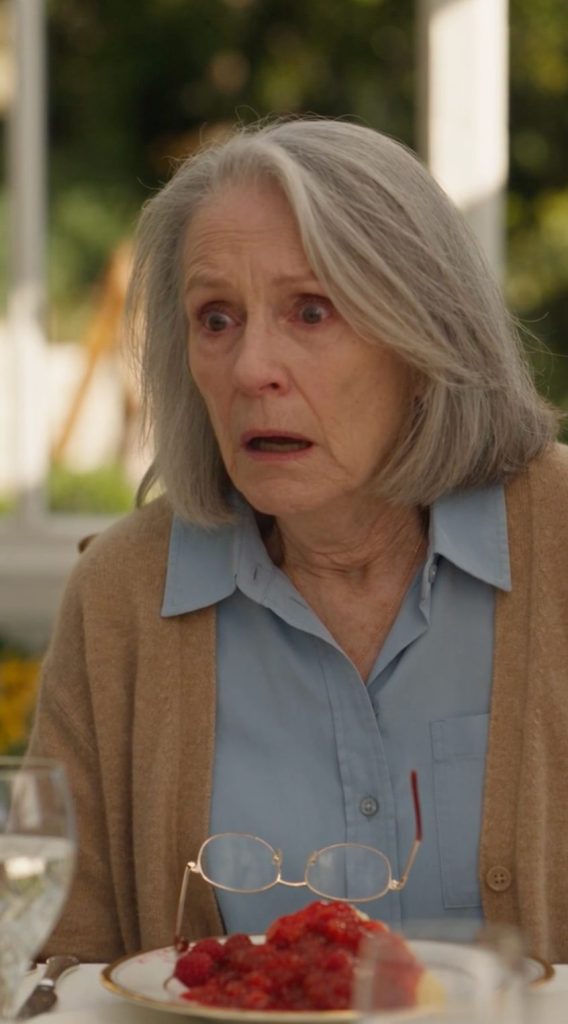
“I know how I sign my own name.”
Samuel made a note.
“We’ll request the original records and verification materials.
The bank may have relied on an electronic authorization, and we need to determine how it was obtained.”
I remembered Madison borrowing my tablet several months earlier to update family photographs.
I remembered Daniel asking me to confirm an email code because the restaurant’s accounting system supposedly required it.
Small things.
Ordinary things.
Things a mother does without thinking when her son asks for help.
Now every memory seemed capable of concealing another betrayal.
I pushed the papers away.
“How much more is there?”
Naomi looked at me with quiet compassion.
“We don’t know yet.”
That answer was worse than any number.
I spent the afternoon walking through Carter House’s history in my mind.
I remembered the first Christmas Thomas and I could afford a proper tree.
We had decorated it with paper stars because the business account contained barely enough money to cover payroll.
I remembered a young dishwasher named Miguel crying because his wife had gone into labor while he was working a double shift.
Thomas handed him the keys to our car and told him not to worry about his shift.
I remembered a winter when the river froze along its edges and six travelers became stranded during an ice storm.
We fed them for three days without charging a penny.
And I remembered Ruth Carter.
I had not thought deeply about Ruth in years.
She was already an old woman when Thomas and I first met her.
Her hair was always braided neatly at the back of her head, and she carried herself with a dignity that made even the most impatient person stop talking.
She had managed the original inn during its final years.
When financial trouble forced the property into a complicated sale, Ruth helped us understand which parts could be purchased outright and which were protected under older arrangements.
She knew every inch of the grounds.
She knew which trees survived flooding and which floorboards needed replacing.
She also knew what it meant to have nowhere to go.
Long before we arrived, Ruth had quietly allowed struggling mothers and their children to stay in vacant rooms.
Sometimes they worked in the kitchen.
Sometimes they helped clean.
Sometimes they stayed only a night.
She never asked them to explain more than they wanted to.
“People don’t always need someone to fix their whole lives,” she once told me.
“Sometimes they just need a door that opens.”
Thomas adored her.
He said Ruth possessed more wisdom than any businessman he had ever met.
When the opportunity came to reorganize the property, she helped us establish the trust that preserved her interests and restricted how the land could be used.
At the time, I understood the practical purpose.
The arrangement protected the property from risky borrowing and helped ensure that the original inn remained operational.
I remembered signing the papers.
I remembered Thomas explaining them.
But business and motherhood had consumed my attention, and eventually the details became something I trusted our attorney to handle.
After Ruth passed away, Thomas continued honoring her wishes.
He kept two guest rooms available for referrals from a local family assistance organization.
He never advertised the arrangement.
He never used it to improve the restaurant’s reputation.
He simply believed helping people should not require applause.
After his passing, I maintained the arrangement through our community partnerships.
But Madison had recently complained that discounted guest rooms reduced revenue.
She had proposed converting the entire north wing into exclusive accommodation for wedding parties.
I refused.
We argued about it for nearly an hour.
Now I wondered whether that argument had been one of the reasons she wanted my authority removed.
I stood beside my kitchen window and looked toward the distant trees.
Ruth had asked us to keep a door open.
Madison wanted to sell the entire house and build a gate around it.
The following morning, I returned to Carter House.
Naomi had advised against going alone, so Samuel accompanied me.
I did not enter through the front doors.
I used the side entrance beside the kitchen, the same door Thomas and I had used when we first worked there.
The familiar smell of coffee, fresh bread, and sizzling butter met me as soon as I stepped inside.
Several employees looked up.
An older cook named Luis removed his cap.
“Mrs.
Carter.”
“Good morning, Luis.”
He studied my face.
“We heard what happened.”
I swallowed.
“I’m sorry you had to.”
He shook his head.
“You don’t apologize for that.”
Across the kitchen, the pastry chef stopped kneading dough.
A dishwasher approached and asked whether I needed water.
Their kindness nearly undid me.



