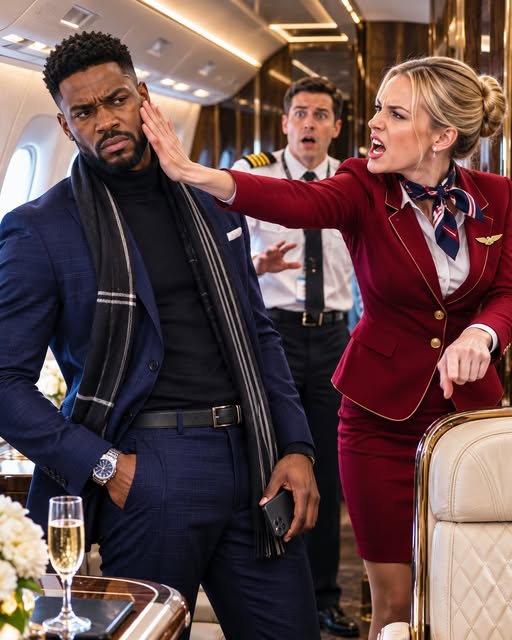
“Marcus,” she said quietly, sliding into the adjacent seat. “Adrian managed to re-establish a burst connection via our orbital relay before London completely dropped below the horizon. You need to see this.”
She rotated the screen toward me.
On the display was a heavily redacted manifest dated November 14, 2014—the exact day Flight 402 plunged into the icy Atlantic. The official accident investigation had claimed Flight 402 was an empty repositioning flight, carrying only six crew members and two tons of commercial avionics freight.
The document on Emily’s screen showed something entirely different.
Listed in the pressurized lower cargo hold were three sealed titanium shipping pods registered not to Sterling Atlantic, but to an unlisted shell corporation named *Aegis Orbital Dynamics*. Each container carried an experimental sub-orbital guidance payload marked with a military classification stamp: *ARCHANGEL PROTOCOL — DEPARTMENT OF DEFENSE / UK MOD JOINT EVALUATION.*
“My father wasn’t testing civilian rudder actuators,” I said, a bitter coldness seizing my throat. “He was inspecting an illegal military payload disguised as commercial cargo.”
“And that’s not all,” Emily said, tapping the decrypt key. “The audio signature from your mysterious caller matched a voice profile from a classified Pentagon procurement hearing six years ago. The voice belongs to Colonel Gregory Vance.”
“Richard Vance’s brother,” I muttered, pieces clicking together with terrifying precision. “Richard wasn’t just a corrupt regulator taking bribes to protect Harold Sterling. Richard was placed inside Sterling Atlantic by his brother to guarantee that military hardware could be trafficked across commercial lanes without customs scrutiny.”
Suddenly, the cabin lights flickered.
A sharp, high-pitched warble sounded from the cockpit forward panel. The armored flight deck door unlatched, and Captain Thomas Bradley stepped out, his weathered forehead beaded with sweat.
“Mr. Donovan,” Bradley said, his voice flat with professional urgency. “Gander Oceanic Control just revoked our transatlantic clearance. They’re ordering us to alter course immediately and divert to an auxiliary military airfield in Goose Bay, Labrador.”
“On what grounds?” I demanded, rising from seat 1A.
“National security directive from Washington,” Bradley replied grimly. “They claim our aircraft’s transponder matches a flagged threat signature. But Marcus… looking at our weather radar, there’s an unmarked Gulfstream cruising three thousand feet directly above our vertical corridor, shadowing our exact vector.”
Chapter 12 – Midnight Intercept
“Captain, if we divert to Goose Bay, does civilian jurisdiction apply?” I asked Bradley, my mind racing through international aviation treaties.
“Technically, yes,” Bradley replied, gripping the cabin bulkhead. “Practically? Goose Bay has a restricted NATO annex. If a classified directive is waiting on the tarmac, local authorities can impound this airframe and hold every soul on board under military quarantine for seventy-two hours without filing charges.”
“Seventy-two hours is more than enough time for Project Archangel to sanitize this aircraft and delete whatever is left on our onboard recorders,” Emily added, her fingers flying across the tablet. “Marcus, look at the Gulfstream above us. Their tail transponder is broadcasting a spoofed Canadian civil registration, but the ADS-B telemetry shows their climb rate matches a military-spec C-37B.”
“Can we outrun them?” I asked.
Bradley shook his head. “Not in a commercial airliner. But we don’t need to outrun them. We need civilian eyes. If we enter US airspace over Maine under an emergency squawk, Boston Center takes over control from Canadian military radar. Even a DOD black directive can’t override a declared in-flight emergency in US civil airspace without public air traffic recordings.”
“What kind of emergency?” Emily asked.
“A fuel pressurization fault,” I said, recalling the slide-rule calculations my father used to drill into my head. “The secondary bleed-valve bypass Morgan tampered with on my private jet was an old Sterling Atlantic trick. If we simulate an intermittent cabin depressurization, Bradley is legally bound by FAA mandate to descend to twelve thousand feet and vector for the nearest major international hub.”
“Which is Boston Logan,” Bradley smiled faintly, catching on. “Hundreds of civilian flights. Live air traffic feeds streamed across the globe. They won’t dare touch us with five thousand aviation spotters listening on open frequencies.”
“Do it, Captain,” I ordered.
Bradley turned on his heel and locked the cockpit door. Within ten seconds, the floor dropped out beneath our feet as the nose of Donovan Flight 1 pitched downward into an aggressive, controlled emergency descent.
Above us, the shadowed C-37B attempted to match our dive, but commercial traffic converging on the Nova Scotia coastline forced them to bank hard to avoid collision alerts.
By the time our aircraft leveled off at twelve thousand feet over the rugged coastline of Maine, Boston Center crackled through the cockpit speakers: *”Donovan Flight 1 Heavy, Boston Center. We copy your emergency declaration. Maintain heading two-one-zero. You are cleared direct to Boston Logan Runway 4 Right.”*



