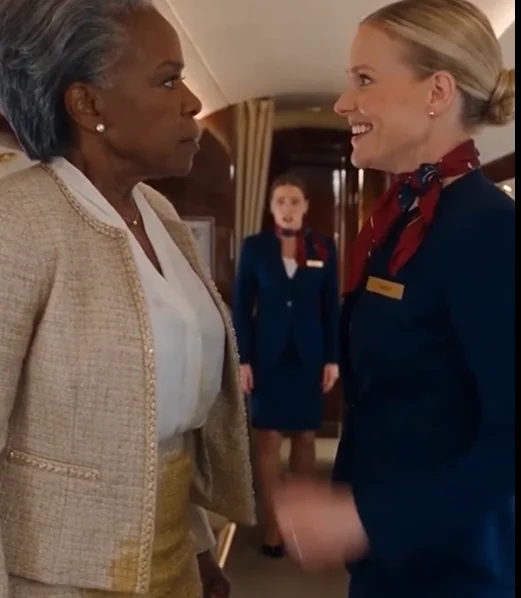
Porter said she would, but her thumb hovered over the screen.
“Please don’t send a summary,” I said.
“Send the record as it arrived.”
“I heard you.”
“Then let the captain watch you preserve it.”
For the first time, Porter looked less annoyed than afraid.
She glanced at Shaw, who had gone pale, then at the doorway behind her.
“Someone else had access to that account,” she said.
“Who?” the captain asked.
“I don’t know.”
“Was the account supposed to be locked?”
I asked.
“Yes.”
The answer landed harder than the name had.
Reynolds held out his hand for the phone, not to take it, but to make clear that the record had to be shared before it could disappear.
Porter stared at him, then began forwarding the file.
A new notification appeared before she finished.
She read it, and the color drained from her face.
“What now?”
Shaw asked.
Porter turned the screen toward the captain.
The access log showed the instruction had been sent from the report team’s office, but the next line recorded a second login under her credentials—made after she had arrived at the aircraft.

Then the system displayed a message waiting to be released, addressed to the entire review panel.
Its subject line read: “Hart’s report is compromised.”
PART 11: The Message Waiting to Be Released
For one breath, nobody moved.
The words “Hart’s report is compromised” sat beneath the access log, addressed to the review panel, as if a verdict had been written before anyone had examined the evidence.
“Don’t release it,” Captain Reynolds said.
“I didn’t compose that message,” Elaine Porter replied, her voice tight.
“I just told you someone else had access to my account.”
“Then preserve the draft and its history,” I said.
“Do not delete it, edit it, or send a correction over the top of it.”
Porter’s thumb left the screen.
“I know.”
“Do you?”
I asked.
“Because a second login under your credentials happened after you came aboard.”
Her gaze flashed toward me.
“I didn’t touch the account after I boarded.”
“Then we need to establish who did.”
Captain Reynolds asked her to place the phone on the open seat, screen visible, without closing the message.
He took down the time and read the displayed details aloud for the record.
Shaw stood very still, staring at the line that said “waiting to be released.”
The message had no body text yet, only its subject and the panel’s address list.
That was not proof of who had written it, but it was enough to put the report itself at risk.
If the panel saw the accusation before the underlying records, they might treat the stain on the pages as the least damaging part of the morning.
“Can you cancel the release?” the captain asked.
“I can’t do it from this device,” Porter said.
“It’s queued in the office system.”
“Call the system administrator.”
She dialed.
While it rang, I kept my hands on the closed binder.
The orange juice had dried tacky along the case seam, and whenever I shifted my fingers, the leather gave a faint sticking sound.
A man answered.
Porter identified herself and asked him to freeze the queued message without deleting it.
She put the call on speaker.
“I need an incident number before I can suspend an outbound notice,” he said.
“The system flagged the account as active, so the message will release at the scheduled time.”
“Then create the incident number now,” I said.
He paused.
“Who is this?”
“Eleanor Hart, the report’s author.”
“The document is under review.”
“The message accusing it of compromise is under review too.”
Captain Reynolds gave him the flight number and his own name.
He explained that the account log showed a second login after Porter arrived at the aircraft, and asked the administrator to preserve the queue, session records, and any edits before making a change.
“I can put a hold on it for thirty minutes,” the man said.
“I’ll need compliance to confirm the incident.”
Porter gave him the incident reference from her phone.
He read it back, and she corrected one digit.
The administrator confirmed the hold.
The message was not gone; it was paused, with the history intact.
I felt no relief, only a narrow space in which to think.

“Who had access to the office terminal?”
I asked.
“Several members of the report team,” Porter said.
“The room is controlled, but it isn’t a private workstation.”
“Was the terminal unattended?”
“I don’t know.”
“Then don’t guess.”
She looked down, stung, but answered evenly.
“I don’t know.”
Shaw shifted closer.
“The review panel was expecting the working copy today.
If they receive that subject line, they’ll assume we’ve found a real problem.”
“Have we?”
I asked.
“No,” he said.



