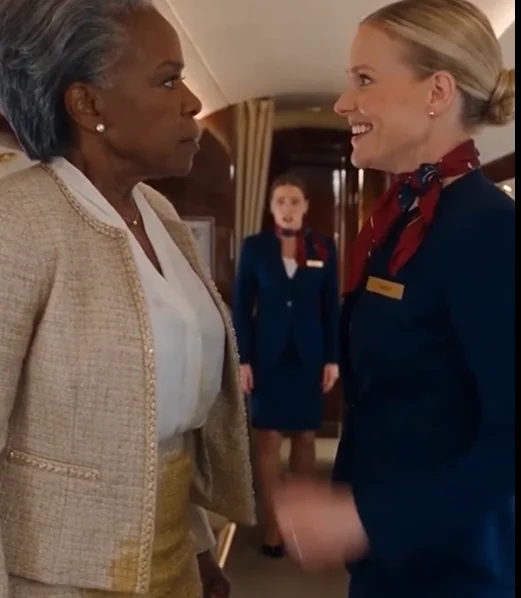
“We’ve found an account anomaly and an unsent message.”
“Then say exactly that to the panel, if they need to know anything before we can verify it.”
He nodded and opened his email, but did not type.
“I won’t send anything without the captain’s record and the original message.”
“Good.”
Porter ended the call and asked the system administrator to send confirmation of the hold to the captain and to me.
The confirmation arrived a minute later.
It included the incident number, the scheduled release time, and a note that the message would remain queued pending review.
Captain Reynolds photographed the confirmation and added it to his incident file.
“The station manager needs the original instruction and both login records,” I said.
“We also need the device or terminal identity for the second login.”
Porter began another call.
This time she spoke with the station manager directly, asking him to preserve the records without changing the account status.
He said the first instruction had come from the report team’s office and that the second login had been made through the same system, but he could not yet tell whether it came from the same terminal.
“Can you identify the user session?”
I asked.
“I’m requesting the session audit,” he said.
“Please include the credential’s lock time and the server times, with the source clocks.”
He agreed to add it to the request.
The details accumulated slowly, each one less dramatic than the accusation on the screen and more useful than it.
A credential had been used; the report had been labeled compromised; a message was waiting to go out.
Yet the people responsible remained unknown, and even the system’s timing had not been reconciled.
Porter lowered her phone.
“This should stay within compliance until we know more.”
“It already left the account that created it,” I said.
“The panel is its intended audience.”
“That is precisely why I’m trying to stop it.”
“Then tell them an unverified notice was queued, and that they should wait for the preserved records.”
She shook her head.
“A premature warning could create its own confusion.”
“So could silence if the message releases.”
Shaw looked between us.
“We can send a holding note that says the report’s status has not changed and the queued notice is being reviewed.”
“Only if the panel needs immediate notice,” I said.
“And it must not imply the report is cleared or compromised.”
Porter considered this, then typed a short message.
She showed it to the captain before sending: the document remained a working copy; an unverified notice had been queued under an account access now under review; no conclusion had been reached about the report’s integrity.

I read it twice.
“Add that the original report remains with me and has not been circulated.”
She added the sentence and sent the message to the panel.
For several seconds, the cabin was quiet again.
Then the station manager’s reply arrived with a partial audit record.
Porter opened the attachment.
The second login had come from a terminal in the report team’s office, but the session was tied to an access token issued to a specific user.
She leaned closer to the screen.
“Whose token?”
I asked.
Porter looked at me, then at Shaw.
“It wasn’t issued to me,” she said.
Captain Reynolds reached for his notebook.
“Whose was it?”
PART 12: The Token in the Audit Record
Elaine Porter kept her eyes on the audit record, and I watched her hesitation spread through the cabin before she gave the name.
“Martin Shaw,” she said.
Shaw did not step back or reach for his phone; he simply stared at the screen as if the token might change if he gave it another moment.
“That token was issued to me,” he said.
“But I didn’t use it.”
Captain Reynolds recorded the answer, then asked Porter to preserve the audit record in its original form and send it to everyone present.
“I will,” she said.
“Include the token issuance and lock history,” I added.
“We need to know whether it was active, when it was used, and from which terminal session.”
Porter nodded and forwarded the file.
I wanted the details, not a confession extracted by surprise.
An account could be misused, a session could remain open, and a record could be incomplete.
The token connected Shaw to the system; it did not establish who had been sitting at the keyboard.
Shaw held his hands where everyone could see them.
“I left that office yesterday afternoon.”
“Did you log out?”
Porter asked.
“I thought I did.”
“That isn’t the same as knowing,” I said.
“No,” he replied.
“It isn’t.”
The admission did not make him guilty, but it changed the shape of the uncertainty.



