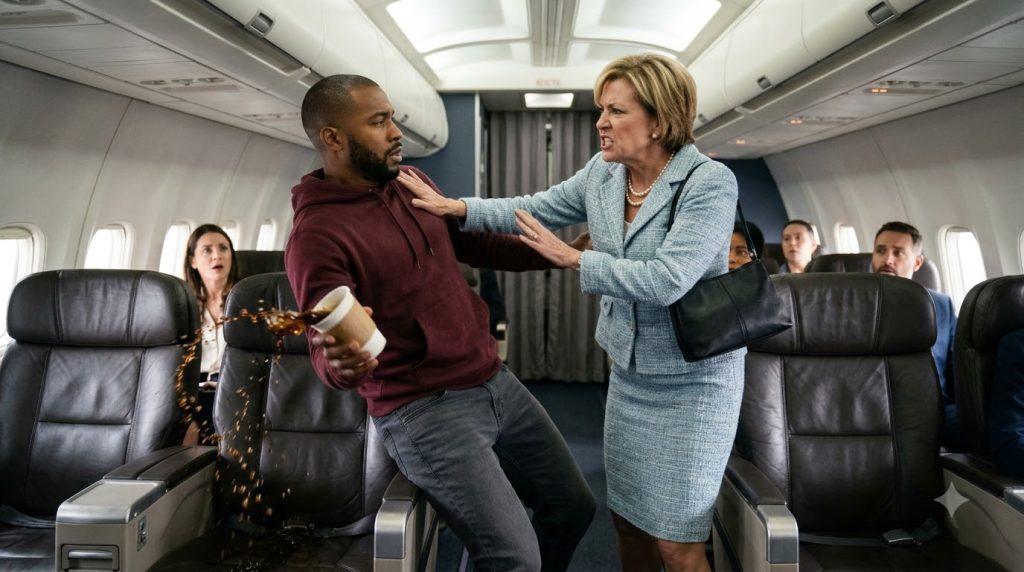
Two weeks after the report, Richard wrote to Zara through her father’s solicitor.
This time the letter contained no request that she stop asking questions.
I made assumptions about you before I knew anything about you, he wrote. I treated your politeness as permission to disregard you. Learning who your father was should not have been necessary for me to correct my behavior.
Zara read those lines without smiling.
Farther down, he acknowledged the incomplete summary and the harm caused by records that had not been properly disclosed.
He did not ask to meet.
He did not ask for forgiveness.
Zara placed the letter in a different folder from her mother’s.
That distinction felt important.
When her father asked whether she wanted to answer, she thought about it for three days.
Then she wrote two sentences.
Thank you for finally answering directly. Please keep doing that when the reviewers ask you questions.
She signed her full name.
Not because he needed reminding who her father was.
Because it was hers.
That Saturday, Zara asked to visit the two children her mother had helped out of the building.
Her father looked surprised, then asked whether she wanted him to contact their mother. He did not tell her it would be too difficult. He did not say they could arrange it when she was older.
“Please,” Zara said.
They met in a park, with the other family’s permission, on a morning bright enough to make the wet grass shine.
The children were no longer as small as the photographs in Zara’s shoebox. Daniel had lost two front teeth. His sister, Rose, carried a football beneath one arm and regarded the adults with immediate suspicion.
“Are we supposed to talk about sad stuff?” she asked.
Her mother started to answer.
Zara crouched so they were closer to the same height.
“We can just play, if you want.”
Rose considered her.
“Are you any good?”
“Not really.”
“You can be on Dad’s team, then.”
The game lasted forty minutes. Adrian slipped once and landed sitting on the grass. Daniel laughed so hard he forgot to chase the ball. Rose celebrated a goal by running a lap around a bench, even though nobody had agreed where the goal was.
Afterward, while the adults bought drinks, Zara sat with the children beneath a tree.
Daniel examined the rabbit hanging from her backpack.
“Was that your mum’s?”
“She bought it for me.”
He nodded, touching one soft ear with a single finger.
“I remember her shoes,” he said.
Zara became very still.
“Her shoes?”
“They were yellow. She said to look at them and follow where they went.”
Zara remembered those shoes. Her mother had bought them on sale and insisted they went with everything, despite extensive evidence to the contrary.
She smiled before the tears came.
“She really liked yellow.”
Daniel nodded again, satisfied that this fact fitted the person he remembered.
Rose leaned against Zara’s arm.
“You can come play again,” she said. “But you have to practice.”
“I will.”
On the way home, Adrian asked how she felt.
Zara watched the park disappear behind them.
“Sad,” she said. Then, after a moment, “And glad.”
He nodded.
She had spent years believing those feelings had to take turns. At the park they had sat beside each other, neither one asking the other to leave.
That evening, she took the Christmas cards from the shoebox and put them on her bookshelf.
They were no longer proof she needed to hide beneath the bed.
They were people she knew.
Before turning out the light, she sent Rose a message asking which day they could play again. The answer came back almost immediately: Saturday. Bring better shoes. Zara laughed, and this time the sound did not surprise her anymore.
CHAPTER TWELVE: THE SEAT BESIDE THE WINDOW
Six months after the flight, Zara returned to the airport with a different backpack.
The rabbit key ring had moved with her.
Her father carried two coffees, one of which was actually hot chocolate, and their boarding passes. They were flying to London for the center’s first program review. Zara had asked to help interview young people about the waiting room books, which she considered a matter of urgent institutional importance.
Adrian handed her the hot chocolate.
“I hear you’ve submitted a formal objection to the dinosaur selection.”
“Three copies of the same book is not a selection.”
“A devastating finding.”
She bumped his shoulder with hers.
Things had changed since the video.
For several weeks she had disliked entering any room where someone might recognize her. Her school had helped keep the incident from becoming her introduction. Maya had perfected a look that discouraged people from asking for a retelling at lunch.
Eventually the internet found other things to argue about.



