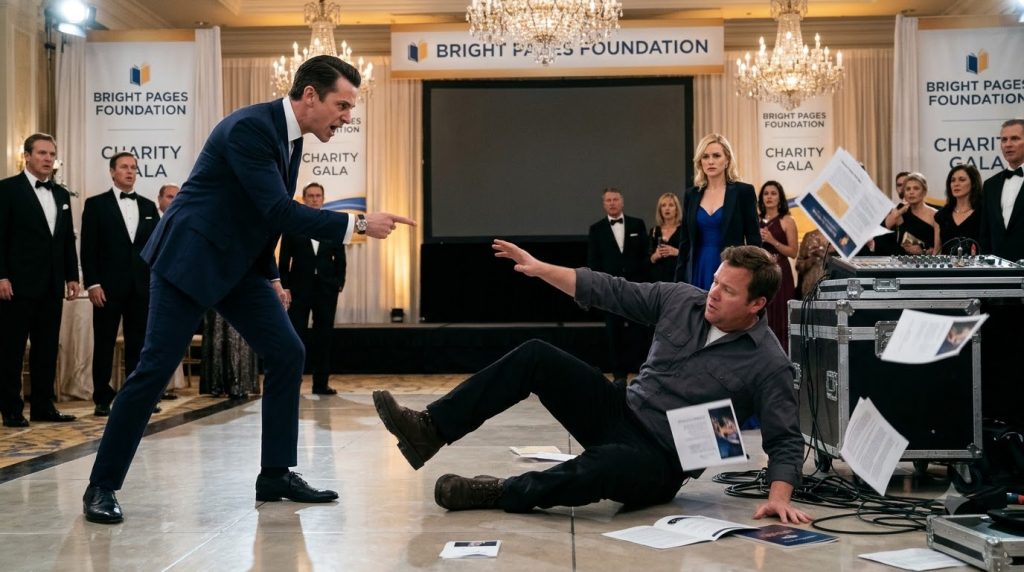
At 8:09, Miles checked the next slide scheduled for the main screen. The replacement donation code remained there. The master of ceremonies began introducing Claire for the closing appeal. Miles looked across the room for Rachel, who was still trying to reach the foundation’s finance contact. There was no confirmation. No written approval. Only a room full of people preparing to give.
Miles considered the options. He could display the code and hope the change was legitimate. He could attempt to substitute the original file during the live presentation while donors were already scanning the printed replacements. Or he could stop the unverified appeal and explain his decision afterward. The closing donation slide began to appear. At 8:10, Miles pressed the blackout control. The screen went dark. The microphones continued working. Nothing had been damaged.
Claire turned toward the control station. “Put it back,” she demanded.
Miles stood beside the laptop. “I can restore the approved presentation. But not that payment link.”
Blake appeared behind her. “He is doing exactly what I warned you about.”
Claire looked from the dark screen to Miles. “You have disrupted this entire event.”
“I know,” he answered quietly. “And I am prepared to explain why.”
But Claire had already accepted Blake’s account. By 8:12, she was accusing Miles of deliberate sabotage. By 8:20, he had been removed from the assignment, the questionable donation appeal had been stopped, and Denise Parker had received instructions to preserve the security recordings. Rachel confirmed that no further donations should be solicited through the replacement code.
Miles left with Owen, carrying his equipment case in one hand and holding his son’s hand with the other. The silence inside their truck was unlike the comfortable quiet they usually shared. Owen stared at the astronomy book on his lap.
“Dad, what if nobody believes you?”
Miles started the engine. “Then we keep telling the truth,” he said. “And we keep the things that can help prove it.”
By Saturday morning, a thirty-eight-second video from the gala was circulating among Richmond event professionals and local community groups. The clip showed Claire confronting Miles, the dark screen, and his refusal to restore the donation slide. It did not show the payment page he had questioned. Beneath the video, a caption claimed that a disgruntled contractor had ruined a charity fundraiser.
Miles watched it once at his kitchen table, then turned his phone facedown. Across from him, Owen pushed his cereal around with a spoon. “Are people going to think you stole money?” the boy asked.
“I never touched the donations.”
“Then why are they saying you did something bad?”
Miles wished there were an answer simple enough for a ten-year-old. “Because they saw one part of what happened. Not everything.”
His phone vibrated. An event company that had tentatively booked him for the following weekend had placed the assignment on hold until the gala dispute could be clarified. Miles typed a careful response. He did not accuse Blake of stealing. He explained that he had stopped an unverified donation link from appearing on the screen and that the foundation was reviewing the matter. Then he attached the records he had preserved.
At the Bright Pages Foundation office, Rachel Foster was examining those same records. She compared the approved donation page with the replacement address Miles had photographed. Rachel checked the foundation’s vendor records, payment arrangements, and authorization files. Westridge Event Services was not an approved recipient. She called the foundation’s finance contact. “Did we authorize a new payment recipient for last night’s gala?”
“No,” came the answer.
Rachel closed her eyes briefly. Someone had placed an unapproved payment destination in front of donors. Rachel arranged to stop further use of the replacement code and began contacting the payment providers involved. Any disputed transactions would need to be traced through the proper channels. She also reviewed publicly available business records. One entry connected Westridge to a business address she recognized from earlier marketing vendor paperwork. A name associated with the filing appeared familiar. Rachel sent the records to legal counsel for verification rather than drawing an immediate conclusion.



