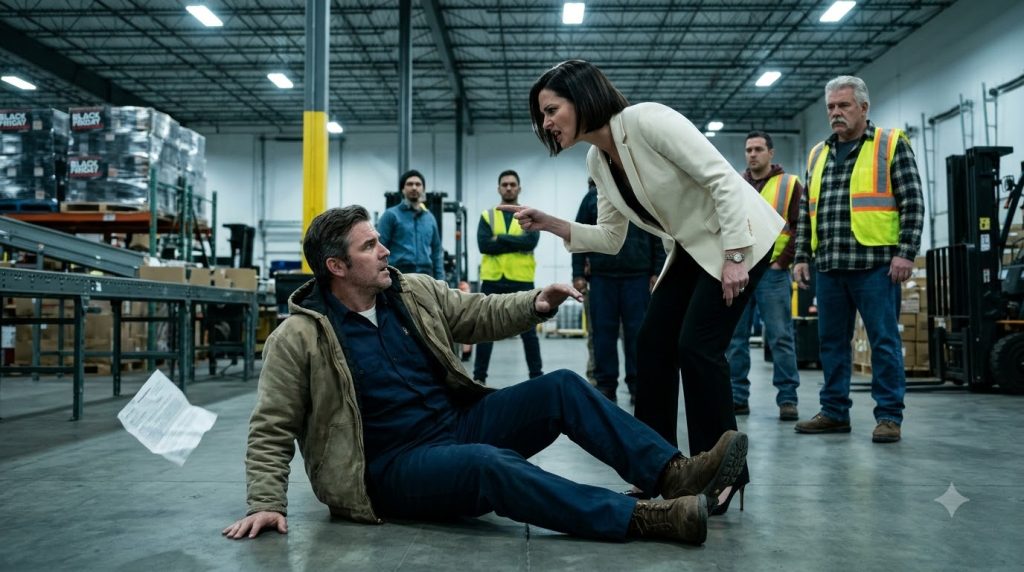
Out in the parking lot, Earl brushed snow from the windshield of his old pickup and stood there for a moment with his hands on the glass. Denise leaned against her car and Cody sat on the curb with his head down trying to take in what they had done. Nobody celebrated. Up in a window on the second floor, Meredith Cole watched them go, her arms folded tight, and she did not look away until the last taillights disappeared into the snow. She had no authority to stop them, and she knew in her heart that she would not have wanted to.
Upstairs, Blair sat at her desk with a cup of black coffee, reading the notifications flooding her inbox. At first, she thought it was a pressure tactic, a bargaining move for more pay. She told her assistant Paige to have the hiring team post job listings immediately. Dana Brooks, the 49-year-old chief operating officer, was already standing in the doorway, her coat still on from the drive-in. Dana explained that the company could certainly hire new people, but it could not instantly replace the experience and the certifications required for certain overnight coordination duties. Blair waved a hand. I don’t pay people to make themselves irreplaceable, she said. Dana held her gaze. They never claimed to be irreplaceable, she answered. We just never prepared anyone to replace them.
Blair’s jaw tightened. She believed Dana was exaggerating in order to prove she had been wrong about Nolan. The room fell quiet with only the hum of the ventilation and the faraway sound of an empty warehouse below. Through the glass wall, Blair could see the dispatch floor, and for the first time in her tenure, it looked like a place where no one lived.
Then a red alert flashed across the dispatch monitor on the wall. The system had assigned six outbound trucks to the wrong staging lanes ahead of Black Friday. Blair snapped, “Fix it.” But the man who usually fixed that kind of error had left the building 8 hours earlier, and she was the one who had sent him away.
By 7 in the morning, the warehouse that had been so full of people the night before felt strangely hollow. Blair ordered every department to send backup staff. A few dayshift employees came, rubbing their eyes and carrying coffee, willing to help, but unfamiliar with how the night coordination actually worked. They could drive a forklift or scan a pallet. They had never run the overnight dispatch board. Dana refused to put untrained people on equipment that required certification. If someone gets hurt on Thanksgiving morning, she said, “That’s not a staffing problem anymore. That’s a lawsuit.” Blair answered sharply that Dana was inflating the danger to make her decision look foolish. Dana did not rise to it. She simply stood by the rule and told Blair she would put her objection in writing if necessary.
Quietly, Dana began making calls of her own. She phoned two certified supervisors who were off for the holiday and asked politely and without any pressure whether they could spare a few hours. She told them they could say no. Both said yes and both said they were doing it for the sake of the drivers, not for the company. Dana thanked them and she added their hours to a list she was keeping because she had a feeling someone would eventually ask what this morning had really cost.
Meanwhile, the six misouted trucks sat in the wrong lanes with their freight half sorted. This was no catastrophe, no dramatic collapse. It was a specific problem that could be solved if somebody understood the backup procedure. Blair demanded a full restart of the software. Dana shook her head. If the system rebooted while its data was out of sync, she explained, the errors might multiply and become impossible to trace. A dayshift manager named Trent Mallerie frowned at the screen and said something that made the room go quiet. Nolan wrote a guide for this. He said, “I’ve seen it. He wrote a guide for almost everything.”
People began searching shared folders. Blair watched them and her face darkened because even with Nolan gone, the people in her building were reaching for the work he had left behind. She stepped out to the empty dispatch floor and stood alone for a moment under the humming lights. Yesterday, she had promised 10 replacements by morning. Now the breakroom held 20 cold cups of coffee and 20 empty chairs, and the only sound was the monitor chiming again. She told herself this was temporary. She told herself the company was bigger than any one man. The chime came again and it did not care what she told herself.



