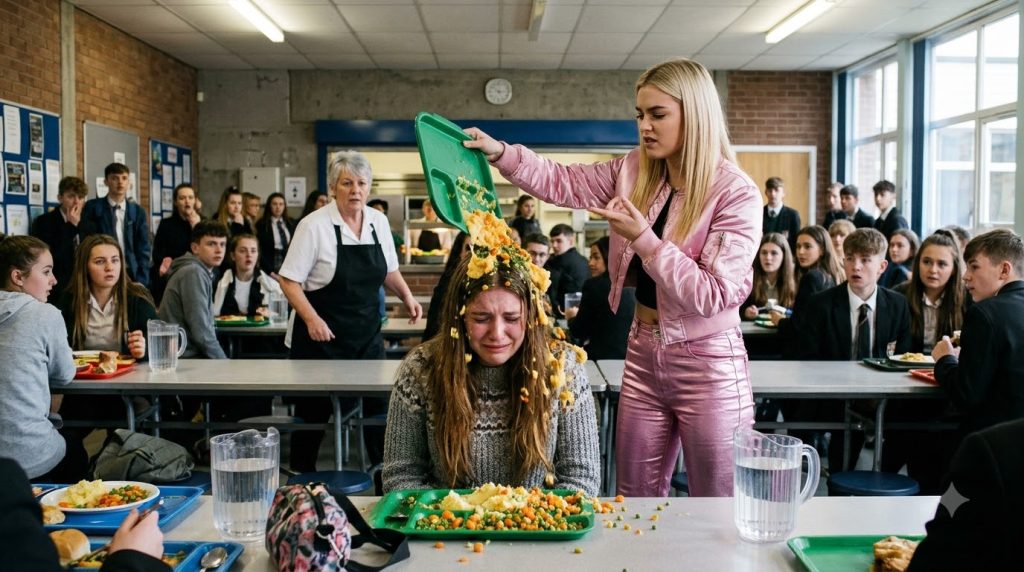
Behind her, the line stretched toward the entrance.
She could hear students shifting impatiently.
She had already spent the morning trying not to look poor.
Her backpack had come from a thrift store.
The zipper was missing its metal pull.
Her sweater had belonged to her mother before it belonged to her.
Now everyone was going to know about the lunch account.
Emma reached for her tray.
“I can put it back.”
Margaret had appeared beside the cashier.
“Leave that here, sweetheart. I’ll sort it out.”
Emma hesitated.
“But I don’t have—”
“Your paperwork just needs to catch up with you.”
Margaret had spoken so naturally that the students behind Emma barely paid attention.
She walked the tray across the counter, nodded toward an empty table, and smiled.
“Go eat before it gets cold.”
By the next day, the account had been corrected.
Margaret never mentioned it again.
That was what Emma liked about her.
She offered help without making people feel smaller for needing it.
Over the next three years, they developed a quiet routine.
Margaret sometimes greeted Emma by name, and Emma always returned her tray neatly instead of leaving it on a table.
When the cafeteria was crowded, Emma occasionally helped pick up fallen napkins or carry empty cartons toward the recycling bins.
Nothing about their relationship seemed especially important.
But in a school where students often treated her as invisible, being remembered mattered.
Now, standing in the ruined remains of her lunch, Emma understood something that had not occurred to her before.
Margaret had been watching.
She had noticed far more than Emma realized.
“Come with me,” Margaret said gently.
Emma glanced toward Vanessa.
The older woman followed her gaze.
“Don’t worry about anyone else right now.”
Emma opened her mouth, but no words came.
Margaret removed a clean towel from the nearby service cart and held it out.
“Here.”
Emma took it with shaking hands.
Behind them, someone whispered, “Is she actually going to get in trouble?”
Another student laughed nervously.
Vanessa straightened her shoulders.
“My dad is on the school foundation board.”
Margaret looked back.
“I know.”
Vanessa’s expression tightened.
“Then you know you shouldn’t be talking to me like this.”
Margaret was quiet for a moment.
Then she said, “I know exactly how I should be talking to you.”
A boy near the windows lowered his phone.
Nobody laughed this time.
Emma pressed the towel against her hair, wishing she could stop trembling.
Her face hurt from holding back tears.
Her sweater clung uncomfortably to her skin.
Margaret placed a light hand on her shoulder.
“We’re going somewhere quiet.”
They walked toward the cafeteria’s side door.
Emma kept her head down.
But as they passed the last table, she heard Vanessa call after them.
“You’re making this a bigger deal than it is!”
Margaret didn’t turn around.
She simply held the door open.
And for the first time that day, Emma stepped into a room where nobody was laughing at her.
The small staff restroom beside the cafeteria had a narrow mirror, a sink, and a shelf stacked with paper towels.
Margaret turned on the warm water.
Emma stood beside the sink without moving.
The older woman looked at her reflection.
“Would you like some privacy?”
Emma shook her head.
Margaret offered another towel.
“All right. We’ll start with your hair.”
Emma lowered her face over the sink.
As the water carried gravy and bits of food into the drain, she stared at the small cracks in the porcelain.
Her throat tightened.
“I didn’t do anything.”
Margaret’s hands paused.
“I know.”
“I wasn’t even talking to her.”
“I believe you.”
Emma swallowed.
“She just came over.”
Margaret gently helped rinse a streak of sauce from the back of her hair.
“You don’t have to explain why someone else decided to be cruel.”
That was when Emma finally began to cry.
Not loudly.
There was no dramatic sob or sudden collapse.
Her shoulders simply started shaking.
Margaret stepped back and gave her room.
Emma covered her face.
“I’m sorry.”
“For what?”
“For crying.”
Margaret turned off the tap.
“Oh, sweetheart.”
Emma wiped her cheeks with the towel.
“I hate this.”
“I know.”
“Everybody saw.”
Margaret waited.
Emma stared at the floor.
“Everybody always sees.”
Those words troubled Margaret more than the lunch tray.
She understood what Emma meant.
Being laughed at once was painful.
Being laughed at so often that you expected it was something else entirely.
“Has this been happening for a long time?”
Emma nodded.
“Since freshman year.”
“Vanessa?”
“Her and some of her friends.”
Margaret’s expression grew serious.
“What have they been doing?”
Emma hesitated.
The answer was complicated, not because the events were difficult to remember but because she had spent years convincing herself they were too small to matter.



