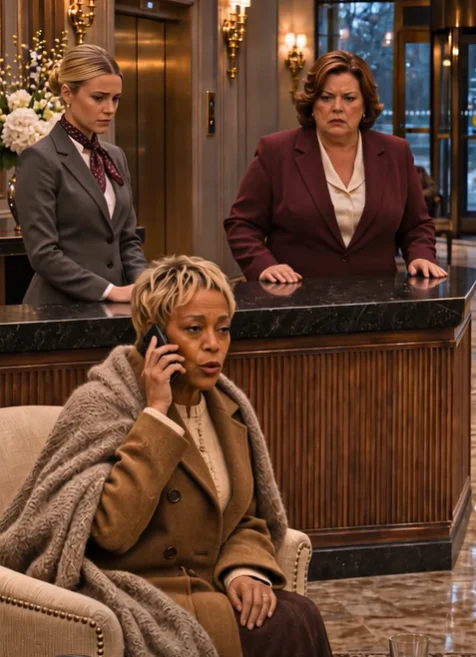
“Did you check?”
Margaret looked at the carpet.
“No.”
“Did you check whether Miss Reed had an appointment?”
“She wasn’t on the visitor list.”
“Did you look?”
A longer pause.
“No.”
Daniel closed the folder.
“Then help me understand what you were protecting.”
She had an answer ready. The hotel’s reputation. The atmosphere. Standards. But the words had begun to sound like furniture arranged around an empty place.
“I thought she was going to ask for money.”
“And if she had?”
“We can’t accommodate everyone.”
“I didn’t ask whether you could give her everything. I asked what would have happened if she needed help.”
Margaret folded her hands so tightly the rings pressed into her fingers.
“I would have directed her to the appropriate service.”
“The one our letters said was here?”
Her head lifted.
Daniel slid the liaison note across the table.
“Tell me about this.”
Margaret stared at her signature.
“Martin said the arrangement was temporary. That the residents were using the hotel to obstruct negotiations.”
“Did they?”
“They came with papers. They asked questions. Sometimes the same questions.”
“Were they answered?”
“I passed them on.”
“To whom?”
“The property team.”
“Did you follow up?”
“No.”
Outside, someone laughed in the corridor. The sound was so disconnected from the room that Margaret flinched.
“I’ve given this hotel eighteen years,” she said.
Daniel’s expression softened, but not in relief.
“I know.”
“I worked when my husband was ill. I covered Christmases. I made sure guests never saw a problem.”
“Perhaps that became the problem.”
She blinked at him.
“People had problems, Margaret. You made sure I didn’t see them.”
She felt tears rise and hated them. Tears looked tactical now, even to herself.
“Your father expected a certain standard.”
“My father expected a great many things. You work for the company as it is today.”
“And today I’m being judged because I didn’t recognize someone important.”
Daniel leaned back.
“No. You’re being asked to account for what you did before you knew whether she was important to me.”
The distinction took longer to reach her than it should have.
He told her she would be placed on paid leave while the hotel investigated the lobby incident, the community desk, and several employment concerns that had been raised separately. She would receive the details in writing. Her access to staff records would be restricted during the review. She could arrange representation and provide any documents she believed relevant.
It was all terribly calm.
Margaret had expected anger she could resent. Instead she had a procedure, and within it the unbearable space to remember what she had done.
“May I apologize to her?”
“You may ask. She isn’t required to receive you.”
Margaret nodded.
At the door she stopped.
“Who is she?”
Daniel looked toward the clay bowl on the mantel.
“The person who stayed.”
After Margaret left, Daniel remained seated for a long time.
Anna stood by the window, reading messages from the reception downstairs. A photographer was asking when the announcement would begin. A lender wanted five minutes. The head of communications suggested a brief statement about a weather-related delay.
“Don’t blame the weather,” Daniel said.
Anna looked up.
“Tell them the project requires further review. We won’t announce it tonight.”
“That will create questions.”
“I know.”
“Martin has already spoken to two directors.”
“I know that, too.”
She closed the laptop.
“Do you want me to arrange a board call?”
“In the morning. Tonight I need the original purchase records for St. Agnes Lane.”
“From our acquisition?”
“Earlier. My father bought the block in the nineties. Evie’s letters mention an agreement.”
Anna hesitated.
“The archived files may take time.”
“Then start tonight.”
He went to Evelyn’s room carrying a fresh pot of tea. Clara had left a note on the table saying she was downstairs finishing her shift. Evelyn sat by the window in a dry cardigan, the brown envelope open beside her.
“You canceled your party,” she said.
“Postponed an announcement.”
“Does it feel different when you put it like that?”
“A little.”
She held out a photograph. The boy in the red sweater stood beside her in front of St. Agnes Lane. Daniel remembered the day: a cold Saturday, paint on the stair rail, Evelyn making him put his coat on before the picture.
He looked at the building behind them.
“You were there before my father bought it.”
“Long before.”
“You said there was an agreement.”
“There was.”
“About your flat?”
“About more than my flat.”
She reached into the envelope and removed a folded sheet, brittle at the edges.
“Your father came to me when the hotel nearly went under. You were nine. You probably remember the year the Christmas tree was smaller.”



