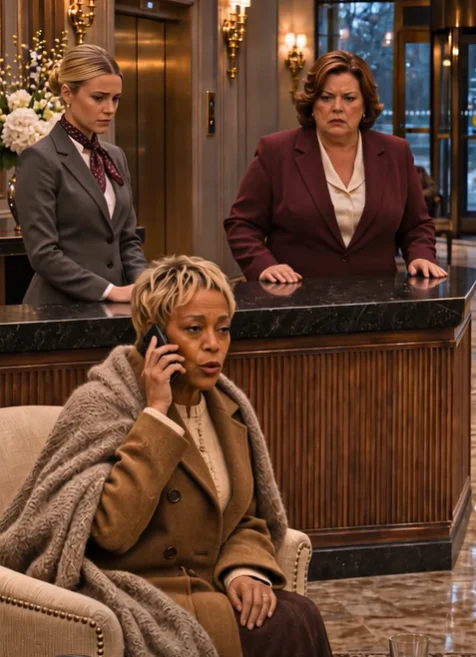
For a moment both women looked as though they might pretend not to recognize the other. Clara had a shopping bag cutting into her palm. Margaret held an umbrella she had forgotten to open.
“Hello,” Clara said.
“Clara.”
Rain gathered on the older woman’s coat. The pavement smelled of damp stone and diesel.
“How is your mother?” Margaret asked.
Clara hesitated.
“She’s viewing a flat tomorrow.”
“I hope it’s suitable.”
“Thank you.”
It was a painfully ordinary exchange. Clara had imagined angry words if they met outside the hotel. Now she could think only of getting home before her frozen groceries began to thaw.
Margaret glanced at the bag.
“You used to bring those insulated carriers to work.”
“They split.”
“Yes. They do.”
A tram passed on the opposite track. Neither woman moved.
“I keep remembering things,” Margaret said finally.
Clara waited, unwilling to help her finish.
“Small things. A driver I made wait outside. A temporary worker who asked to sit down during a briefing. I had reasons for all of it.”
“Did you?”
“I had explanations.”
Clara shifted the bag to her other hand.
“I don’t know what you want me to say.”
“I don’t either.” Margaret looked at the unopened umbrella. “That’s part of what I’m trying to learn. To say something without making another person responsible for making it easier.”
The next tram appeared around the bend.
Clara could have offered reassurance. She could have said everyone made mistakes, that eighteen years of work counted, that the hotel would miss certain things Margaret did very well. Some of that might even have been true.
Instead she said, “You should open your umbrella.”
Margaret looked up, surprised. Then she laughed once, quietly.
“Yes. I should.”
They boarded through different doors. Clara sat beside a window and watched the city pass, feeling neither victorious nor cruel. It occurred to her that a boundary could be ordinary. It did not need a dramatic sentence or a slammed door. Sometimes it was simply leaving someone to do their own thinking.
That evening she told her mother about the encounter while they looked over the new flat’s floor plan.
“Do you think she’ll change?” Clara asked.
Ruth moved a penciled outline of the sofa away from the radiator.
“I don’t know.”
“You usually have an answer.”
“I usually have an opinion. Different thing.”
Clara smiled.
Her mother pointed at the drawing.
“Will that table fit?”
“Only if we move the bookcase.”
“Then we’ll move it.”
They spent the next hour deciding where ordinary things could go in a room that belonged to their future. Clara found she could think about Margaret without allowing the thought to take over the evening. That felt like a small freedom she had earned without anyone granting it.
That evening, Clara received a letter confirming her permanent appointment after completion of the normal probation review. The letter listed her performance, attendance, and training record. It did not call her courageous. She was unexpectedly grateful.
Daniel offered her a meeting about a possible role helping redesign guest services. Clara asked for the job description, the pay range, and time to consider it.
Her mother applauded when she heard.
“Very romantic,” Ruth said. “A job description.”
“It isn’t romantic.”
“Exactly.”
Clara laughed, then looked at the envelope from the housing office beside her plate. Their application for an accessible flat had finally progressed. The offer was across town, farther from St. Agnes Lane but near a bus route and a park.
“Do you want it?” she asked.
Ruth touched the floor plan.
“I want to visit it.”
The distinction felt newly precious.
At the hotel, Daniel and Evelyn went through the old letters one evening at a time.
Some were painful. Some were ordinary enough to be worse: a note about a school play, a recipe, a question about whether he had remembered a dentist appointment. Daniel found three letters he had never seen. Evelyn found two she had written in anger and regretted. They did not make the past neat.
One night he brought the red sweater from the photograph, which she had kept folded at the bottom of her suitcase. Its missing button left a small round absence near the collar.
“I can mend it,” he said.
“You?”
“You taught me.”
“I taught you to thread a needle. You declared the rest unnecessary.”
“I’ve revised my position.”
He bent over the work, tongue pressed against his upper lip in concentration. Evelyn watched him for a moment, then looked away before he could see her smile.
Outside, the river moved under the lamps. Downstairs, a woman waiting for a late train was offered a chair without being asked whether she had a room.
No one upstairs knew it had happened.



