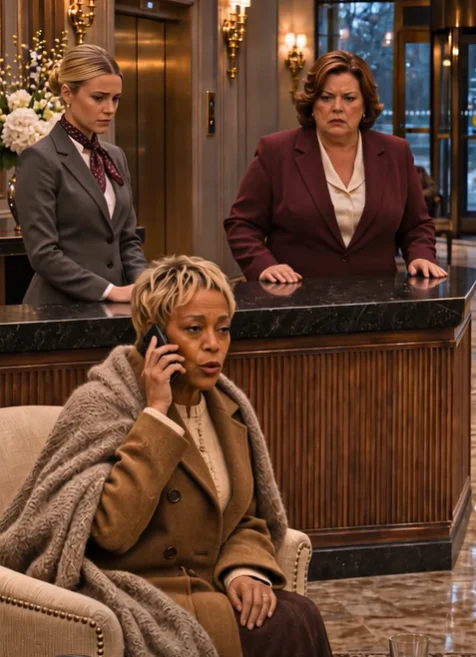
“This template went through communications. I approved the hotel address.”
Everyone looked at her.
“The property team said they would staff a temporary desk. I checked with operations and received confirmation.”
“From Margaret?”
“Yes.”
She did not try to make the admission smaller. Clara respected that immediately.
“I should have checked after the letters went out,” Anna added.
Martin leaned forward.
“We can resolve the administrative confusion without destabilizing a project that creates two hundred jobs.”
“Will any of those jobs come with a home?” Evelyn asked.
“That’s not a useful comparison.”
“It is if you need both.”
He looked away first.
Daniel asked Anna to preserve the relevant emails and access logs, then to arrange an independent review of the acquisition process. Martin objected to the word independent. He said it suggested distrust. Daniel answered that trust was the reason he wanted someone outside the team to examine the facts.
“You can’t stop a development because of one unpleasant evening,” Martin said.
“I can stop an announcement until I understand what I’m announcing.”
“You’ve understood it for six months.”
“I’ve read six months of summaries.”
“You signed the acquisition approval.”
That landed. Clara saw it land.
Daniel looked down at the folder again.
“Yes,” he said. “I did.”
For the first time, Martin seemed to believe he had found a way through.
“Then you know we acted with authorization.”
“You had authorization to develop a proposal. You did not have authorization to describe occupied homes as vacant, or to send people to a desk that didn’t exist.”
“Those classifications have technical meanings.”
“Explain them to the people receiving the letters.”
Martin looked at Evelyn. She waited with her glasses halfway down her nose, the very picture of someone willing to listen to a good explanation.
None came.
Anna’s phone vibrated. She read the message and leaned toward Daniel.
“Margaret would like to know whether she should go home.”
“No. Ask her to join us.”
Evelyn shifted in her chair.
“Daniel, I don’t want a trial conducted around my soup.”
He looked at her plate, then at the clock, and seemed to remember her long journey.
“You’re right.”
He asked Anna to arrange a quiet room for Evelyn, with dry clothes and anything she needed. The old woman agreed only after he promised she would not be photographed or introduced to investors as some touching surprise.
“I’m not a centerpiece,” she said.
“I know.”
“You nearly made me one when you invited me.”
He had no answer for that.
Clara helped Evelyn stand. At the door, the old woman stopped and looked back at Martin.
“I don’t mind change,” she said. “I’ve changed homes, jobs, hairdressers, and my opinion of several men. Don’t put that in your report as the problem.”
Martin’s expression remained polite.
“What is the problem, then?”
“You decided we didn’t need to be asked.”
In the corridor, Clara offered her arm. Evelyn accepted it without fuss.
“Are you tired?” Clara asked.
“Furious. It can feel similar at my age.”
The room Anna had chosen overlooked the river. Someone had turned down the bed, placed slippers beside it, and left a bowl of oranges on the table. Evelyn stared at the oranges for a moment.
“He used to take them from the kitchen and bring them to my flat,” she said. “Thought he was being generous. Didn’t understand they belonged to his father already.”
“Daniel?”
“He was a child. Children give you what they have.”
She touched one of the oranges but did not take it.
“Grown men can make the same mistake.”
Clara unpacked the damp coat, hanging it in the bathroom. Inside the suitcase she found carefully folded clothes, a book of crossword puzzles, and a small tin that rattled when moved.
“Leave that out,” Evelyn said.
The tin held buttons. Ordinary buttons, sorted into little paper envelopes.
“I brought a shirt of his,” she explained. “From when he was small. There’s a button missing. Foolish thing to think about today.”
“It doesn’t sound foolish.”
Evelyn sat on the bed.
“He asked me last week why I never married.”
Clara waited.
“I told him I was busy. It wasn’t the whole truth, but it wasn’t a lie. My sister needed help with her children. My mother needed care. Then there was Daniel. You keep thinking you’ll have time for your own life after everyone else has finished needing you.”
“Do you regret it?”
“Some days I regret the men I said no to. Some days I remember their table manners and feel grateful.”
Clara laughed.
Evelyn took her hand.
“Don’t let this place become the whole measure of you.”
“I need it.”
“Needing work is different from owing it your silence.”