Chapter 16: The Warning
When she handed back the phone, my mother’s voice sounded older. “Come home, Adrian.” “Tell me what happened.” “Not there.” “Then come here.” “No.” The answer was immediate. I stared at the rain. “Why?” “You don’t understand what you’re opening.” “Then help me understand.” “I will. At home.”
I almost agreed. Habit was powerful. Even at thirty-six, part of me heard my mother say come home and reached for my coat. Then I looked at the note, at the line about Richard, and at Helen sitting nearest the door. “I can’t leave this here,” I said. My mother did not answer. “Did they accuse Dad?” “No.” “But the note says if they blame him—” “He didn’t take anything.” “I didn’t say he did.” “He didn’t.”
Her voice broke on the second word. I had heard my mother cry after my father died—in the bathroom, in the kitchen when she thought the refrigerator was loud enough, and once, sitting on the edge of my bed with a stack of bills in her lap. I had not heard her sound like this since. “Mom. Listen to me.” “No, you listen. Don’t sign anything. Don’t accept anything they hand you. And don’t be alone with Graham Voss.”
Across the table, Evelyn looked up. My mother had said it loudly enough to hear. “Why?” “I’m coming.” Then she ended the call.
Richard returned with hotel counsel eleven minutes later. Counsel was a woman named Judith Lane, whose glasses hung from a thin gold chain. She introduced herself, placed a business card on the table, and looked at Helen without seeming to.
Evelyn stood. “We need a preservation notice circulated immediately.” “It has been,” Judith said. “To whom?” “Relevant management.” “Include security, information technology, human resources, finance, and the board office. Please preserve historical material as well as current records.”
Judith’s eyes moved to the old note. “How historical?” “Twenty years.” Richard shifted. Judith did not. “Much of that material may no longer exist.” “Then we’ll document the retention schedule and any destruction dates.” “Certainly.”
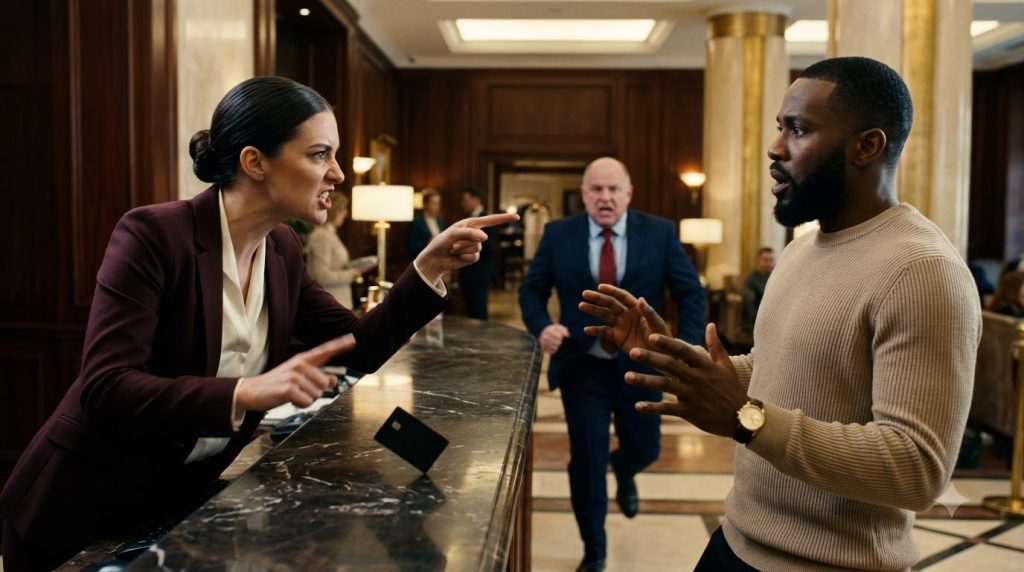
There was a difference between Judith and Richard. She did not waste energy pretending the request was unreasonable. Instead, she began calculating exactly what answering it would reveal. “Mr. Mercer,” she said, “I understand there was an unfortunate interaction at reception.” “There was.” “We will investigate it.” “You’re investigating more than that.” “So I gather.”
Richard placed a folder in front of me. “This is everything currently available on Ruth Mercer’s departure.” I opened it. A resignation letter. A payroll summary. A receipt for a severance payment. Three pages. Again. My mother’s signature appeared at the bottom of the first. I knew the signature. I did not know the woman described above it. According to the letter, Ruth Mercer had voluntarily chosen to pursue other opportunities after many rewarding years. She had thanked management for its support. She had acknowledged that no dispute remained. The paper looked clean. That made it worse.
“How much was she paid?” I asked. Richard pointed to the third page. I read the amount: three thousand dollars. Thirty years reduced to a number smaller than one night in the presidential suite. “What did she release?” Judith answered, “We would need the underlying agreement.” “Where is it?” “It wasn’t in this personnel file.” “But it appears in the settlement register.” “We’re checking.”
Evelyn reached for the resignation letter. “May I?” I gave it to her. She read it, then read it again. “Who drafted this?” Richard said, “Human resources, presumably.” “Who witnessed the signature?” “It should be listed.” “It isn’t.” She placed the page beside my mother’s note. “Why does the letter say she resigned on Thursday?” Richard looked down. “That was her final employment date.” Helen spoke: “It happened on Wednesday.”
Everyone turned toward her. She shrank slightly, then sat straighter. “The dinner was Wednesday. I remember because my daughter had her school concert, and I traded shifts to attend the rehearsal the night before.” Judith folded her hands. “Payroll dates don’t always match the date a document was signed.” “No,” Evelyn said. “They don’t.” She looked at Richard. “Where is the settlement agreement?”
Graham Voss arrived before Richard answered. No knock. The door opened, and the room seemed to rearrange itself around him. He was seventy-two, broad through the shoulders, with silver hair and the relaxed posture of a man who had spent decades being offered the best chair. I had met him six times. He remembered birthdays. He asked assistants about their children. At our second dinner, he told a story about washing glasses in his father’s restaurant. I had liked him. That fact lodged in my throat now.



