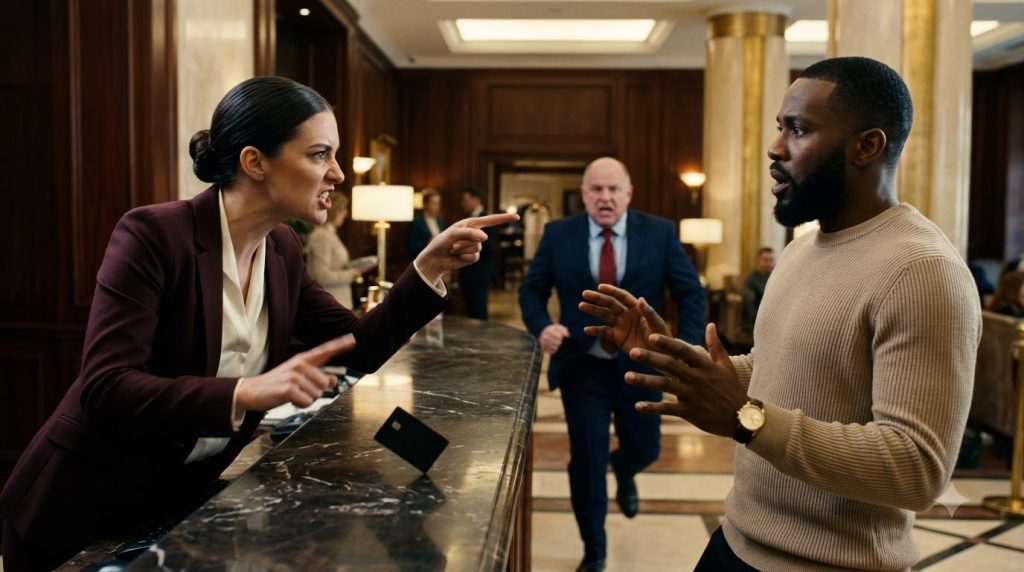
“Who is Graham Voss to you?” Silence. Not confusion. Silence. Then the faint sound of something being set down. “Where are you?” “At the Bellweather.” “I told you—” “I know what you told me.” “Who have you spoken to?” “Helen.”
My mother drew a breath. “Put her on.” “Mom.” “Please.” I looked at Helen and held out the phone. Her face changed when she heard my mother’s voice. “Ruth.” She turned slightly away. “No. I didn’t tell him that.” A pause. “I gave him the copy.” Another pause. Then Helen shut her eyes. “I’m sorry.”
I felt a cold pressure gather behind my ribs. My mother did not apologize often. Helen had—for giving me a piece of paper. When she handed back the phone, my mother’s voice sounded older. “Come home, Adrian.” “Tell me what happened.” “Not there.” “Then come here.” “No.” The answer was immediate. I stared at the rain. “Why?” “You don’t understand what you’re opening.” “Then help me understand.” “I will. At home.”
I almost agreed. Habit was powerful. Even at thirty-six, part of me heard my mother say come home and reached for my coat. Then I looked at the note, at the line about Richard, and at Helen sitting nearest the door. “I can’t leave this here,” I said. My mother did not answer. “Did they accuse Dad?” “No.” “But the note says if they blame him.” “He didn’t take anything.” “I didn’t say he did.” “He didn’t.”
Her voice broke on the second word. I had heard my mother cry after my father died—in the bathroom, in the kitchen when she thought the refrigerator was loud enough, and once, sitting on the edge of my bed with a stack of bills in her lap. I had not heard her sound like this since. “Mom. Listen to me.” “No, you listen. Don’t sign anything. Don’t accept anything they hand you. And don’t be alone with Graham Voss.” Across the table, Evelyn looked up. My mother had said it loudly enough to hear. “Why?” “I’m coming.” Then she ended the call.
Chapter 8: The Testimony
“I don’t need a lawyer.” “Maybe not. But I don’t want you confused about my role.” Helen looked at me. “I just wanted him to see it.” “Where is the original?” I asked. She swallowed. “I don’t know.” “You said my mother asked you to keep this.” “The copy.” “And the original?” “She said someone else had it.” “Who?” “I never knew.” Evelyn wrote something down. Outside the window, rain struck the courtyard in silver lines. Helen’s eyes followed it for a moment. “Your mother was careful,” she said. “People thought because she was quiet, she didn’t understand what was happening around her.” “I know.” “No.” Helen shook her head. “You knew her at home.”
There was no accusation in the words. That made them harder to hear.
“At work, Ruth remembered things. Room numbers. Who signed for linen. Which suite needed towels when the guest had checked out three hours earlier. She could tell you who had crossed a service landing by the mud on their shoes.” She rubbed one thumb over the other. “That night, she remembered something someone wanted forgotten.” “What?” Helen looked toward the door. Evelyn noticed. “I can ask hotel counsel to confirm that no employee is to be penalized for cooperating with this inquiry,” she said. “I can’t promise how anyone will behave. I can document what happens.” Helen nodded slowly. Then she turned back to me. “There was a dinner.” “At the hotel?” “A private dinner in the west ballroom. Foundation people. Investors. Someone from the city. I wasn’t serving it.
I was working the cloakroom.” My father had been a driver. Some nights he drove business travelers to the airport. On others he worked private events, collecting guests from houses where the front steps cost more than our car. “The Bellweather Winter Fund,” I said. Helen’s eyes widened. “You remember.” “I remember the name on his schedule.” My father had written it on the back of an envelope. I remembered because I had used that envelope to work out a geometry problem while he drank coffee before leaving. He had taken the envelope away from me, laughing. “Try not to turn my passengers into triangles.” That was the last ordinary thing he had ever said to me. Helen drew a breath. “Your mother was called upstairs around seven. Something had gone missing.” “How much?” “I heard different amounts.” “What kind of money?” “Cash. Donations, they said. An envelope from the private dining room.” “Why call a housekeeper?” “Because she had entered the room.” “To clean it.” “Yes.” “And they accused her.” Helen looked at the note. “Yes.” The word settled between us. For twenty years, my mother had allowed me to believe that she had left a job. Someone had accused her of stealing, and she had carried that fact home without letting me see it. “Who accused her?” “Mr. Voss.” Evelyn’s pen stopped. I knew the name. Everyone involved in the acquisition knew the name. Graham Voss. Executive chairman of Bellweather Hospitality. The man waiting upstairs for my signature. “Graham Voss was here that night?” I asked. “He ran the event.” “Was Richard present?” “He was called in later.” Helen closed her eyes briefly. “I didn’t see everything. You need to understand that.” “Tell us what you saw,” Evelyn said. “If someone told you something afterward, distinguish that from what you witnessed.”
Helen nodded. “I saw Ruth taken into the old accounts office. I saw Mr. Voss arrive with a woman carrying a leather folder. Then Richard came.” “What woman?” “I don’t know her name.” “Could you recognize her?” “Maybe.” “What happened next?” “Your father arrived.” My hand tightened around the folded note. “Why?” “Ruth called him.” “About the accusation?” “I think so. I didn’t hear the call.” “What did you see?” “He came through the staff entrance. He was angry, but not shouting. He asked where his wife was.” That sounded like my father. He could be furious without raising his voice. As a child, I had known I was in trouble when he became exceptionally polite. Helen continued. “He went into the office. The door closed.” “How long?” “I don’t know. Ten minutes. Maybe fifteen.” “And then?” “Ruth came out crying.” I looked toward the window. Not because I needed to see the rain. Because I did not want Helen to watch my face. “She had a mark on her wrist,” Helen said. “What kind of mark?” “Red. Like someone had held her.” “Did she say who?” “No.” Evelyn wrote carefully. “Did you see anyone grab her?” “No.” “Then we won’t infer who caused it.” Helen nodded again. “I took her into the linen room. She asked for paper. She wrote the note.”



